
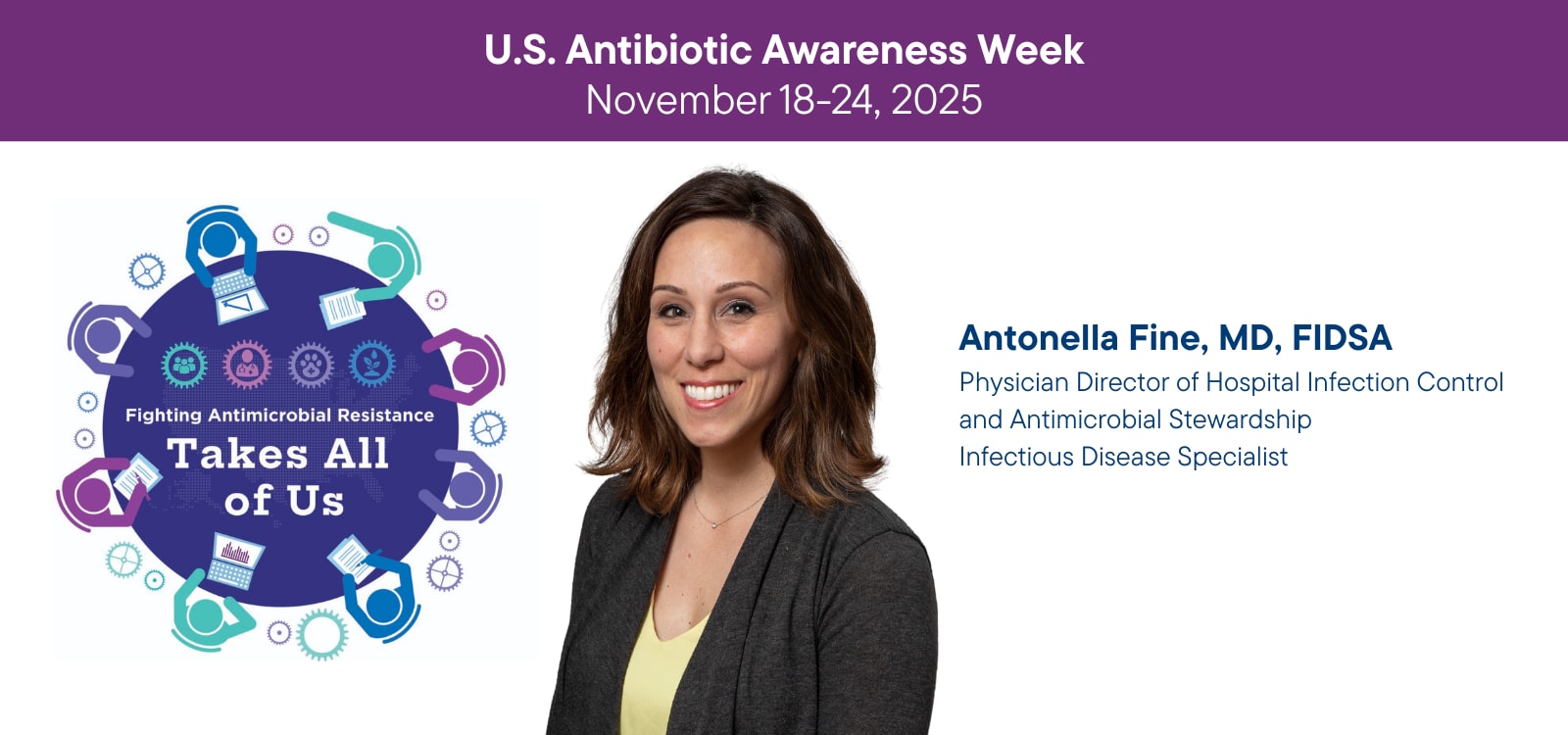
By Dr. Antonella Fine, FIDSA, Physician Director of Hospital Infection Control and Antimicrobial Stewardship, Infectious Disease Specialist and Ethan Brenneman, PharmD, Antimicrobial Stewardship Pharmacist
Each November, U.S. Antibiotic Awareness Week brings focus to the vital task of fighting antimicrobial resistance, a global health threat that claims over a million lives annually. This year’s theme, “Fighting Antimicrobial Resistance Takes All of Us,” reflects the need for a united, collaborative approach, sometimes referred to as a One Health approach, that acknowledges the interconnected health of people, animals, and plants in our shared environment.
Understanding the Impact of Antimicrobial Resistance
Antimicrobial resistance contributes to over 2.8 million infections in the U.S. each year, with more than 35,000 resulting in death. When Clostridioides difficile infection resulting from antibiotic exposure is added to these, the U.S. toll exceeds 3 million infections and 48,000 deaths. This threat is growing, in part, due to the widespread use of antimicrobials, not only in human medicine but also in animal care and agriculture. Resistance can not only complicate treatments and increase healthcare costs, but also lead to treatment failure and death.
How Individuals Can Help
Protecting yourself and your community from antimicrobial resistance involves everyday actions:
- Prevent the Spread of Germs: Washing your hands is one of the best ways to avoid getting sick and prevent spreading germs. Cover your mouth and nose with a tissue when coughing or sneezing. Avoid touching your eyes, nose, and mouth with unwashed hands. Stay home when you are sick.
- Vaccinations: Keep up-to-date with vaccines to prevent infections such as influenza, RSV, and COVID-19.
- Appropriate Antibiotic Use: Understand that colds, runny noses, and the vast majority of sore throats, ear or sinus infections, and chest colds (bronchitis) are caused by viruses, not bacteria, and best managed with symptomatic and supportive care. Follow the treatment recommendations of your healthcare provider and take antibiotics only when truly indicated, and exactly as prescribed. Do not share them, use anyone else’s, or save them for later.
- Food Safety: Wash your hands, cooking utensils, and surfaces. Separate raw meat from other foods, cook foods to safe temperatures, and chill leftovers and other foods promptly.
- Stay Healthy: Take good care of chronic conditions like diabetes.
- Prevent STDs: Reduce your risk of Sexually Transmitted Diseases, such as syphilis, gonorrhea, chlamydia, and HIV by practicing abstinence, choosing safer sexual activities, and properly and consistently using condoms. If you or your partner tests positive, seek treatment promptly to prevent spread of infection or reinfection. Talk to your healthcare provider to learn if medication to prevent HIV and syphilis is appropriate for you.
How Healthcare Providers Make a Difference
With unnecessary prescriptions contributing to resistance, providers have a crucial role. Sturdy Health’s guidelines recommend:
- Judicious Prescribing: Avoid antibiotics for viral infections like colds, the flu, and most cases of ear infections, sinus infections, and bronchitis.
- Using Narrow-Spectrum Antibiotics: This approach minimizes the risk of antimicrobial resistance and side effects.
- Following Sturdy Health’s Guidelines: Providers can follow evidence-based antibiotic guidelines for optimal patient care.
Sturdy Health’s Commitment
Sturdy Health’s Antimicrobial Stewardship team, led by Dr. Antonella Fine and Ethan Brenneman, is dedicated to promoting responsible antimicrobial use. By conducting daily reviews, establishing treatment guidelines, and reporting usage data to the CDC, we aim to contribute to a healthier future with fewer antimicrobial-resistant infections.
For more information, visit the CDC at cdc.gov/antimicrobial-resistance. Together, we can make a difference in the fight against antimicrobial resistance.